
Bunion
Surgery
Permanent three-dimensional bunion correction using Lapiplasty® and Nanoplasty® — addressing the unstable joint that causes the deformity, not just the visible bump.
Technology
What is a Bunion?
A bunion (hallux valgus) is a progressive, three-dimensional deformity of the big toe joint driven by an unstable midfoot joint. As the tarsometatarsal joint destabilizes, the first metatarsal drifts outward and the big toe angles inward toward the second toe — creating the painful bony prominence you see on the inside of the foot.
The visible bump is not the problem — it is the symptom. The true cause is joint instability that gets worse with every step you take. Standard "bump shaving" procedures that ignore this instability carry up to a 30% recurrence rate. Dr. Katz corrects the deformity in all three planes and secures the unstable joint permanently.
- Progressive deformity — worsens over time without treatment
- Root cause: unstable tarsometatarsal (midfoot) joint
- Associated with hereditary foot structure and biomechanics
- Traditional bump-shaving leaves joint instability unaddressed
- Lapiplasty® secures the joint — dramatically lowering recurrence
- Nanoplasty® micro-incision option for milder deformities
Symptoms & Related Conditions
Bunion surgery addresses the full spectrum of deformity-related symptoms — not just the cosmetic bump.
Lapiplasty® 3D — Our Primary Correction for Moderate to Severe Bunions
Unlike traditional osteotomy (which cuts and shifts the bone in only two dimensions), Lapiplasty® 3D rotates the entire metatarsal bone back into its anatomically correct position in all three planes — eliminating the bump, straightening the toe, and permanently securing the unstable joint with titanium fixation. Patients walk the same day in a surgical boot. The procedure is FDA-cleared and backed by multi-center clinical trial data showing significantly lower recurrence rates compared to traditional approaches.
How Bunion Surgery Works
Consultation & 3D Imaging
Dr. Katz performs a comprehensive biomechanical evaluation and weight-bearing X-rays to assess the degree of deformity, joint health, and the three-dimensional instability driving your bunion. This imaging determines whether Lapiplasty® or Nanoplasty® is the right procedure for your anatomy.
Surgical Correction
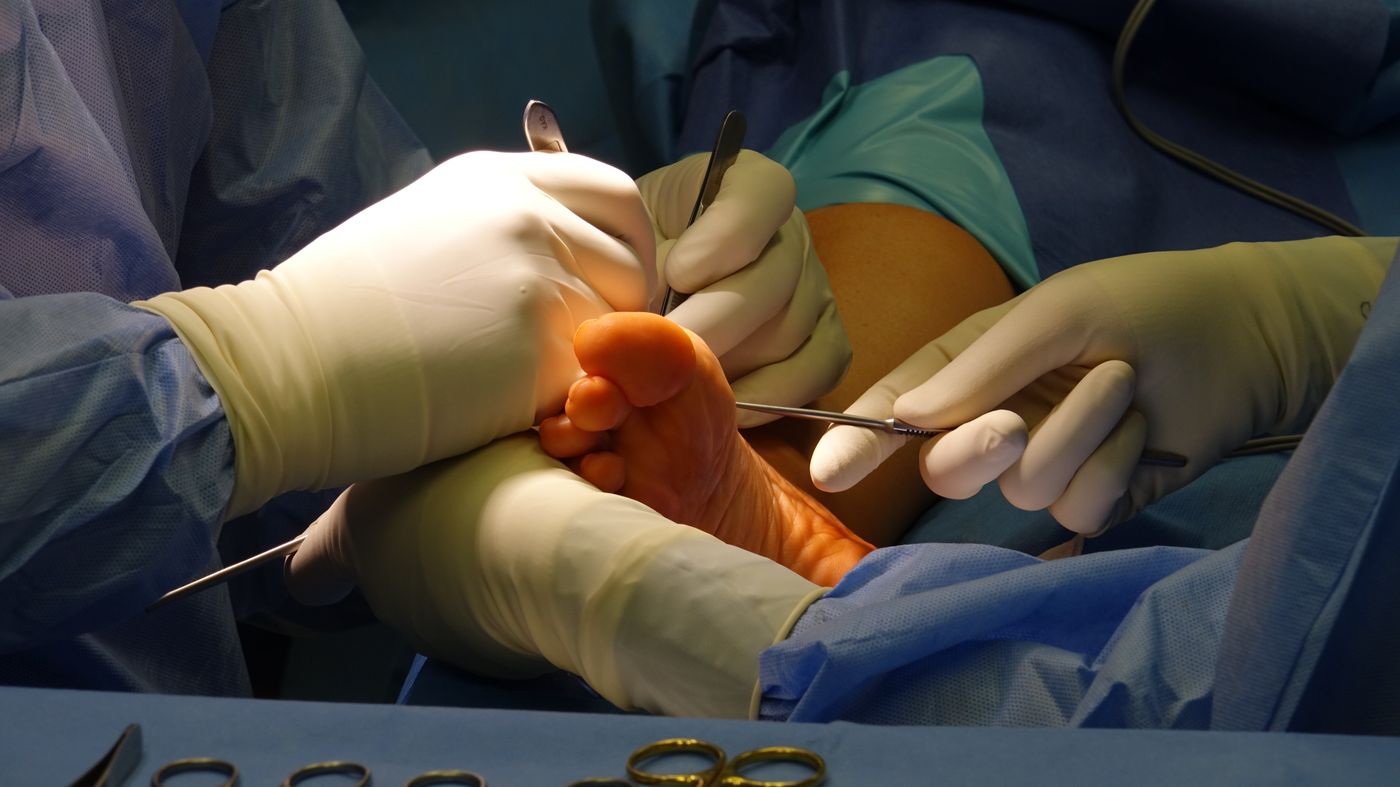
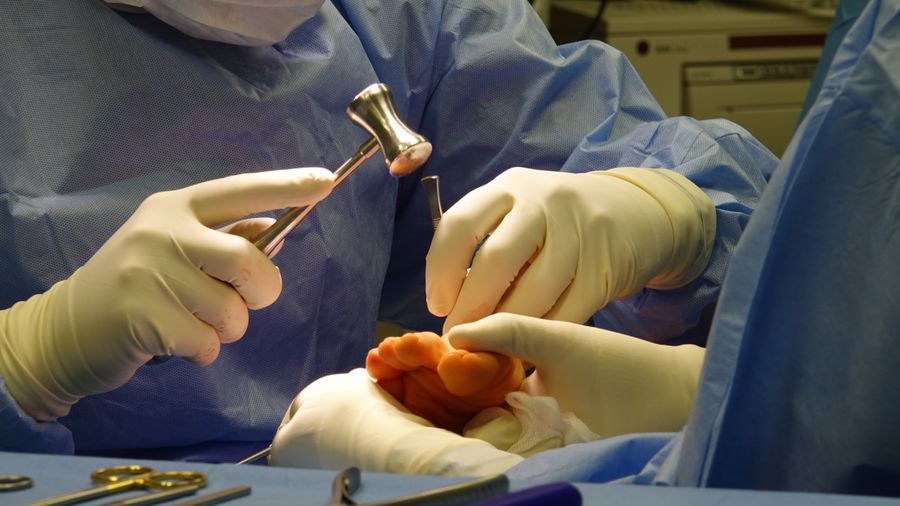
Under local or regional anesthesia, Dr. Katz corrects the bunion in all three planes — rotating the metatarsal bone back into its anatomically correct position. In Lapiplasty®, titanium plates permanently secure the unstable midfoot joint. Nanoplasty® uses micro-incisions for smaller deformities with virtually no visible scarring.
Protected Weight-Bearing Recovery
Most patients walk the same day in a surgical boot. The first two weeks focus on wound healing. By weeks three through six you'll transition to a supportive shoe. At six to eight weeks, most patients return to comfortable, wide-toe-box footwear. Full activity — including sports — resumes at four to six months.
Long-Term Follow-Up
Dr. Katz schedules follow-up visits at two weeks, six weeks, three months, and one year to monitor bone consolidation with repeat X-rays, manage any swelling, and clear you for progressive activity. Because we correct the root cause rather than shave the bump, recurrence rates are significantly lower than traditional osteotomy.
Are You a Candidate?
Bunion surgery is most appropriate when conservative measures can no longer keep pace with your deformity or quality of life is significantly affected.
Good candidates typically have:
- ✓Visible bony bump on the inside of the big toe joint
- ✓Pain that limits walking, standing, or daily activity
- ✓Big toe drifting toward or overlapping the second toe
- ✓Difficulty fitting standard footwear comfortably
- ✓Corns, calluses, or skin breakdown at the bunion site
- ✓Conservative treatment (pads, wide shoes, orthotics) no longer helping
- ✓X-ray confirmation of metatarsal malalignment or joint damage
Surgery may need to be deferred for:
- ✕Uncontrolled diabetes or peripheral vascular disease
- ✕Active infection in the foot or lower leg
- ✕Severe osteoporosis that would compromise fixation
- ✕Medical conditions preventing safe anesthesia
- ✕Patients whose primary concern is cosmetic only (mild deformity, no pain)
- ✕Patients not yet finished with conservative management
Bunion Surgery FAQ
What exactly is a bunion and why does it keep getting worse?
A bunion — medically called hallux valgus — is a progressive three-dimensional deformity rooted in an unstable joint in the middle of your foot (the tarsometatarsal, or Lisfranc, joint). Because the joint is unstable, every step you take allows the first metatarsal bone to drift outward while your big toe drifts inward toward the second toe. Over time this creates the characteristic bony bump on the inside of your foot, but the visible lump is only the end result — the real problem is the unstable, malaligned joint driving it. Without addressing that instability, the deformity will continue to worsen regardless of shoe choice, orthotics, or conservative padding. This is why modern surgical approaches like Lapiplasty® 3D correct the problem in all three planes rather than simply shaving the bump or performing a standard bone cut.
What is the difference between Lapiplasty® 3D and Nanoplasty® 3D?
Both procedures correct bunions by repositioning the metatarsal bone, but they are designed for different degrees of deformity. Lapiplasty® 3D is Dr. Katz's preferred approach for moderate to severe bunions. It uses precision instrumentation to rotate the entire metatarsal back into its correct three-dimensional position and then secures the unstable midfoot joint permanently with titanium plates — eliminating the root cause of recurrence. Nanoplasty® 3D is a minimally invasive technique best suited for milder deformities. It uses percutaneous (through-the-skin) micro-incisions, resulting in virtually no visible scarring and a slightly faster initial recovery. Dr. Katz will determine which approach is optimal based on your X-ray measurements, the degree of deformity, and your lifestyle demands at your consultation.
How long is the recovery after bunion surgery?
Recovery progresses in predictable stages. In the first 48 hours you'll keep your foot elevated to control swelling. By day two or three most patients walk in a surgical boot — no crutches in most cases. Sutures are removed at two weeks and you'll transition to a supportive sneaker or wide-toe-box shoe around weeks four to six. Full return to regular footwear, including dress shoes, typically occurs at six to eight weeks. High-impact activity and sports return between four and six months once Dr. Katz confirms solid bone healing on follow-up X-rays. Swelling in the foot can persist for up to a year, which is normal and does not indicate a complication. Taking time off work depends on whether your job requires prolonged standing — desk workers often return in two to four weeks; standing or physical jobs typically require six to eight weeks.
Will my bunion come back after surgery?
Traditional bunion surgery (a standard 2D osteotomy, or bone cut) has a recurrence rate of up to 20–30% over a patient's lifetime, largely because it does not address the underlying joint instability. Lapiplasty® 3D significantly reduces this risk by permanently securing the unstable tarsometatarsal joint with titanium hardware — addressing the root cause rather than managing the symptom. Published clinical data on Lapiplasty® show recurrence rates that are substantially lower than traditional approaches at three-year follow-up. While no surgical procedure guarantees zero recurrence, Dr. Katz's 3D correction technique combined with appropriate post-operative orthotic management and footwear guidance represents the current gold standard for durable, long-term correction.
Is bunion surgery painful? What should I expect afterward?
Modern bunion correction is significantly less painful than patients typically anticipate. Dr. Katz uses a regional nerve block (ankle block) that keeps the foot numb for 12–18 hours after surgery, giving you a comfortable initial recovery window. Prescription pain medication is provided for the first several days, and most patients transition to over-the-counter anti-inflammatories by day three or four. The most common complaint in the first two weeks is swelling and a dull aching pressure rather than acute sharp pain. Elevating your foot above heart level, applying ice intermittently, and taking anti-inflammatories as directed are the most effective strategies for managing discomfort. By two weeks post-op the majority of patients report their pain levels as manageable on a daily basis.
Can I get both feet done at the same time?
Simultaneous bilateral bunion surgery is technically feasible but is generally not recommended by Dr. Katz for most patients. Having both feet operated on at once means you would be non-weight-bearing on both feet immediately after surgery, which significantly limits your independence during the early recovery period and introduces logistical challenges around transportation, bathing, and daily activities. For patients with bilateral bunions, Dr. Katz typically recommends staging the procedures six to twelve months apart — correcting the more painful or more severely deformed foot first, allowing full recovery, and then addressing the second foot. This staged approach is safer, allows for optimized anesthesia dosing, and gives you the experience of knowing exactly what to expect for the second surgery. Exceptions may be considered for patients with compelling logistical circumstances who are otherwise excellent surgical candidates.
Often combined with bunion correction
Related Treatments
Ready to permanently correct your bunion?
Book a bunion consultation with Dr. Katz. He will review your X-rays, assess the degree of deformity, and give you an honest recommendation on whether Lapiplasty® or Nanoplasty® is right for you — with no surgical pressure.