
Custom
Orthotics
Precision-cast devices engineered to your exact foot shape — correcting the biomechanical forces that cause heel pain, flat feet, plantar fasciitis, and chronic ankle problems.
Lifespan
What Are Custom Orthotics?
Custom foot orthotics are physician-prescribed inserts fabricated from a precise three-dimensional model of your foot, captured while held in its biomechanically corrected neutral position. Unlike mass-produced drugstore insoles, every parameter — arch height, heel cup depth, forefoot posting angle, and shell rigidity — is tailored to your specific diagnosis and activity demands.
Dr. Katz performs a full biomechanical assessment before prescribing, ensuring the orthotic corrects the underlying mechanical fault rather than simply adding cushioning. The result is a device that does real structural work with every step you take.
- Fabricated from a precise 3D cast of your individual foot
- Corrects overpronation, supination & arch collapse
- Available in rigid, semi-rigid & accommodative materials
- Sport-specific, dress-shoe & diabetic designs available
- Lasts 3–5 years vs. 6–12 months for OTC insoles
- Insurance reimbursable for qualifying medical diagnoses
Conditions We Treat with Orthotics
Custom orthotics address a wide range of foot, ankle, and lower-extremity conditions driven by biomechanical imbalance.
Flat Feet & Plantar Fasciitis — Our Most Common Indications
Overpronation (flat feet) is the single most common biomechanical fault leading patients to our practice. When the arch collapses inward with each step, it increases tensile stress on the plantar fascia, strains the posterior tibial tendon, and rotates the tibia internally — producing heel pain, arch pain, shin splints, and knee problems. A custom orthotic repositions the rearfoot in a neutral alignment, dramatically reducing these downstream forces. Combined with shockwave therapy when chronic inflammation is already present, orthotics are the cornerstone of our non-surgical heel-pain protocol.
How Your Orthotics Are Made
Biomechanical Assessment
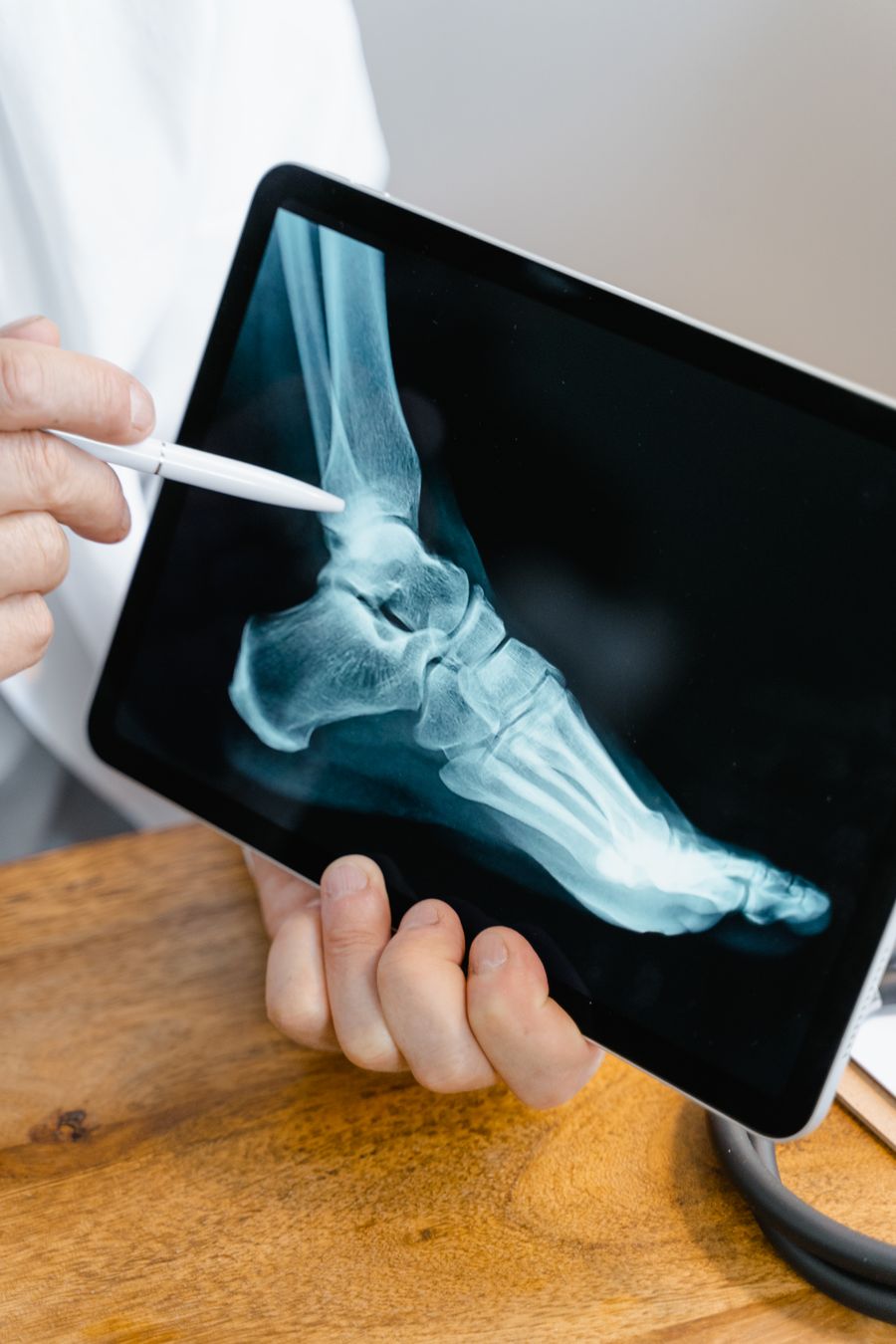
Dr. Katz performs a comprehensive gait analysis and lower-extremity biomechanical exam — assessing your arch height, heel alignment, forefoot posture, and walking pattern — to identify the mechanical forces driving your symptoms.
Precision Casting or 3D Scanning
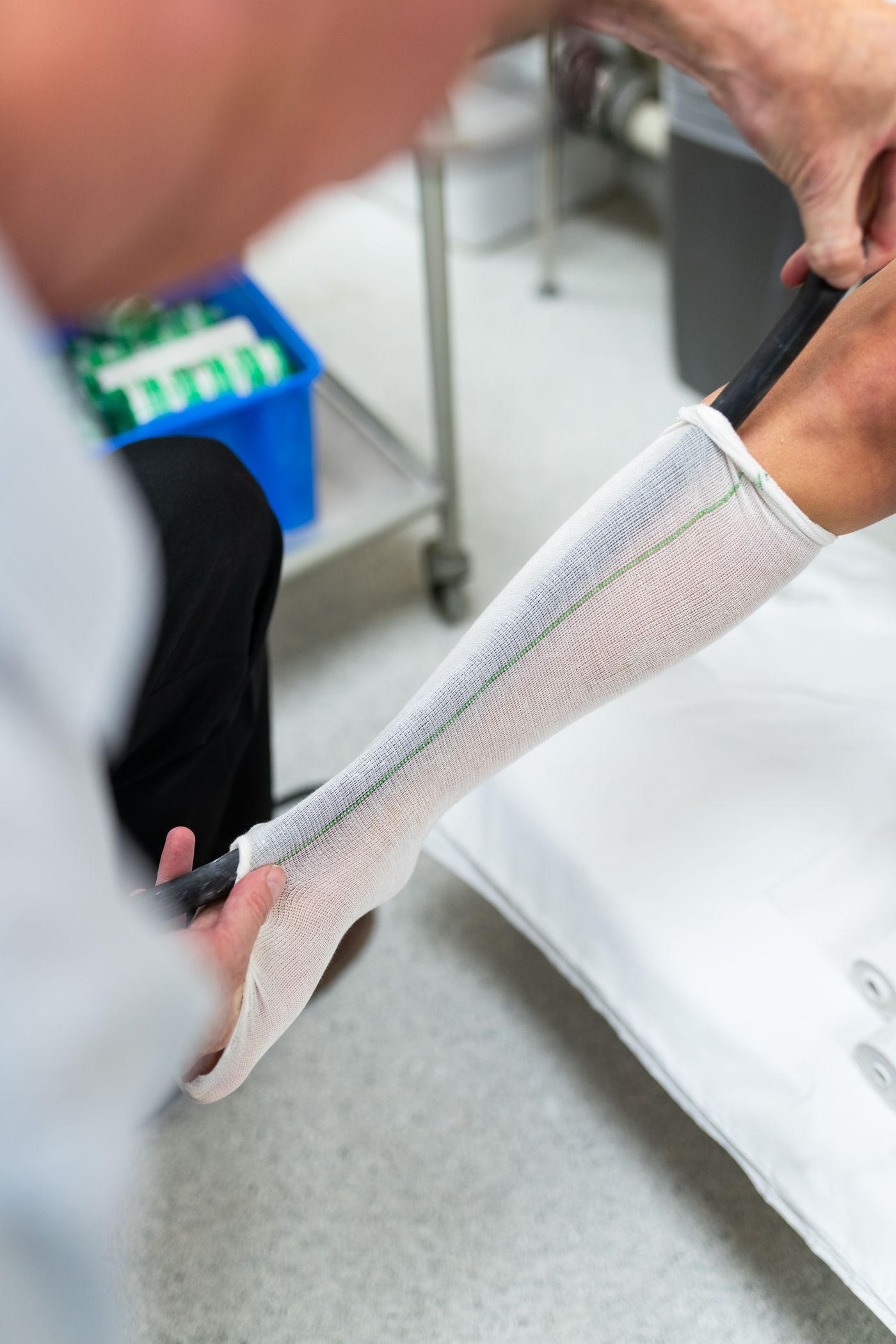
We capture the exact contours of your foot using digital 3D scanning or plaster casting with your foot held in its corrected neutral position. This ensures the orthotic addresses your specific deformity rather than a generic foot shape.
Laboratory Fabrication
Your prescription is sent to an orthotics laboratory where devices are fabricated from medical-grade materials — rigid graphite carbon fiber, semi-rigid polypropylene, or soft accommodative foam — selected based on your activity level and diagnosis.
Fitting & Calibration
At your fitting appointment, Dr. Katz evaluates the orthotic inside your footwear, checks alignment, and makes any necessary on-site modifications. A break-in protocol is provided so your musculature adapts gradually over 2–4 weeks.
Are You a Candidate?
Custom orthotics benefit anyone whose foot pain or lower-extremity symptoms have a mechanical component — which is most patients.
Good candidates typically have:
- ✓Heel pain, arch pain, or plantar fasciitis
- ✓Flat feet (overpronation) or high arches (supination)
- ✓Diabetic neuropathy or peripheral vascular disease
- ✓Bunions, hammertoes, or forefoot deformities
- ✓Runner's knee, shin splints, or IT band syndrome
- ✓Achilles tendinitis or posterior tibial tendon dysfunction
- ✓Prior foot or ankle surgery requiring offloading
- ✓Desire to remain active while managing chronic foot conditions
Orthotics may not be the first step for:
- ✕Active infection or open wound on the foot
- ✕Acute fracture requiring immobilization (cast first)
- ✕Severe peripheral edema — fit after swelling resolves
- ✕Footwear with no removable insole (some dress shoes)
- ✕Patients unable to commit to a 2–4 week break-in period
Custom Orthotics FAQ
What is the difference between custom orthotics and over-the-counter insoles?
Over-the-counter insoles are mass-produced to fit a range of average foot shapes and provide generic cushioning or arch support. They can offer temporary comfort but they cannot correct underlying biomechanical problems because they are not shaped to your individual foot. Custom orthotics, by contrast, are fabricated from a precise three-dimensional model of your specific foot — captured with your foot held in its corrected, neutral position. They are prescribed to address your exact diagnosis: the degree of your overpronation, the severity of your arch collapse, the position of your heel, and your activity demands. Custom orthotics are made from medical-grade materials chosen by your physician and typically last 3–5 years with proper care. OTC insoles typically last 6–12 months and provide no biomechanical correction. For mild comfort needs, an OTC product may suffice temporarily, but for any structural pathology — plantar fasciitis, flat feet, heel spurs, diabetic foot complications — custom orthotics are the clinical standard of care.
How do custom orthotics treat plantar fasciitis?
Plantar fasciitis occurs when the thick band of connective tissue running along the bottom of the foot becomes overloaded and inflamed, most commonly at its attachment to the heel bone. The root cause is almost always a biomechanical one: excessive pronation, a low or collapsed arch, or a tight Achilles tendon increases tensile stress on the plantar fascia with every step. A custom orthotic addresses this mechanically by supporting the medial longitudinal arch and controlling rearfoot pronation — reducing the stretch force on the fascia by a clinically meaningful amount per stride. Studies have shown that combining custom foot orthoses with stretching protocols reduces plantar fasciitis pain significantly faster than stretching alone, with 70–85% of patients reporting substantial improvement within three months. For patients with chronic plantar fasciitis that has failed stretching and physical therapy, orthotics are often combined with shockwave therapy (ESWT) for an accelerated recovery.
Are custom orthotics covered by insurance?
Coverage varies by plan. Many commercial insurance plans — and Medicare in specific situations — provide partial or full coverage for custom foot orthotics when they are prescribed by a podiatric physician for a documented medical diagnosis. Common covered indications include diabetic peripheral neuropathy, severe flat foot deformity (pes planus), rheumatoid arthritis affecting the foot, and post-surgical foot reconstruction. Before your appointment, our team can verify your specific benefits and obtain any required pre-authorization. We will also provide detailed documentation of your diagnosis and the medical necessity for custom orthotics to support your claim. Patients without coverage can still obtain orthotics at a predictable out-of-pocket cost — and because custom devices last 3–5 years versus the 6–12 months of OTC alternatives, the per-year cost is often comparable.
How long will my custom orthotics last?
A well-made pair of custom orthotics typically lasts 3–5 years, though this varies by the shell material, your body weight, and how actively you use them. Rigid carbon fiber or polypropylene shells maintain their corrective properties the longest — often 5 years or more with normal wear. Accommodative soft orthotics (designed for diabetic patients or those with sensitive skin) have a shorter functional lifespan of 1–2 years because the foam materials compress and lose their cushioning. Top covers and padding on any orthotic should be replaced every 12–18 months as they wear from daily use. Dr. Katz recommends an annual check of your orthotics during your routine foot care visit so we can assess any material degradation and make adjustments as your foot or gait changes over time.
What conditions are custom orthotics used for beyond foot pain?
Custom orthotics correct foot biomechanics, and because the foot is the foundation of the entire kinetic chain, problems in foot mechanics frequently manifest as pain higher in the body. Orthotics are commonly prescribed for: runner's knee (patellofemoral pain syndrome) caused by excessive pronation rotating the tibia inward; shin splints from repetitive stress on the tibial periosteum; IT band syndrome in runners with leg length discrepancy; low back pain from pelvic tilt secondary to overpronation; and hip pain from asymmetrical gait mechanics. In diabetic patients, orthotics serve a critical protective function — preventing the pressure concentration that causes skin breakdown, ulcers, and ultimately the infections that lead to amputation. For rheumatoid arthritis patients, accommodative orthotics distribute pressure away from inflamed metatarsal joints, enabling comfortable ambulation. The prescription — shell material, posting angle, arch height — differs for each of these applications.
Do orthotics weaken foot muscles over time?
This is a common concern, and the evidence does not support it for properly prescribed custom orthotics. A custom orthotic functions like corrective lenses for the foot: it positions the foot in its mechanically efficient posture so the intrinsic and extrinsic muscles can function from a better starting position. There is no research demonstrating that correctly prescribed foot orthotics cause intrinsic foot muscle atrophy in healthy adults. In fact, when a collapsed arch is supported, the muscles that were chronically overstretched or compensating inefficiently are freed to work more effectively. That said, Dr. Katz always combines orthotic prescription with a targeted foot and ankle strengthening program — not because orthotics cause weakness, but because strengthening is an independent component of long-term foot health. Think of orthotics and exercise as complementary tools, not competing ones.
Often combined with orthotics
Related Treatments
Ready to correct the source of your foot pain?
Book a custom orthotics consultation. Dr. Katz will perform a full biomechanical assessment, identify the mechanical cause of your pain, and prescribe a device precisely engineered to your foot.